









Table of contents
Indica makes you sleepy, sativa wakes you up. Everyone has heard this sentence, and it appears in almost every shop. The problem: it is not true like that. The terms come from botany and describe how a plant grows. They say much less about the taste or effect of a particular strain than most people think.
Where indica and sativa come from, how to tell the plants apart, what a hybrid is and what research says about the rule of thumb is on this page.
In short
- Indica and sativa originally describe how a plant grows and where it comes from.
- Almost all strains on the market today are hybrids.
- According to a 2021 study in Nature Plants, the label often does not match the genetics. The terpene profile tells you more.
Indica vs. sativa: the difference at a glance
| Sativa | Indica | |
|---|---|---|
| Growth | tall and slim, often well over two metres | small, compact, bushy |
| Leaves | long and narrow | short and broad |
| Flowering time | long | shorter |
| Original origin | warm regions near the equator | mountain regions such as the Hindu Kush |
| Reputation | stimulating, "daytime strain" | calming, "evening strain" |
| What of this is established | Growth, leaf shape and flowering time. The reputation is not. | |
What is sativa?
Sativa comes from Latin and means roughly "sown" or "cultivated". It refers to the crop. For centuries Cannabis sativa was grown mainly for fibre and seeds, that is for ropes, fabrics and oil.
Sativa plants grow tall, have long, narrow leaf fingers and take a long time to flower. Their home is warm regions with long summers. Many well-known strains with a bright, citrusy or herbal aroma are considered sativa-dominant, Haze strains being the classic example.
What is indica?
Indica simply means "from India". The plants are small, compact and have broad, short leaves. They flower faster, which is an advantage in cooler mountain regions with short summers. Many strains with an earthy, sweet or dark berry aroma are listed as indica-dominant.
Whether indica is a species of its own or just a subspecies of sativa is still debated among botanists. The Wikipedia article on Cannabis indica summarises the different classifications well.
Where the classification comes from
Carl Linnaeus gave the name Cannabis sativa in 1753. He knew the European fibre plant. About thirty years later Jean-Baptiste de Lamarck described a smaller plant from India as a separate species and called it Cannabis indica.
So it was about two plants that looked different. Taste, aroma or any effect played no role back then. That meaning came much later, mainly through breeders and sellers.
Indica, sativa and hybrid: why almost all strains are mixed
Pure indica or sativa plants hardly exist any more. Strains have been crossed with each other for decades, and almost everything on the market is a hybrid. If a strain is listed as "indica-dominant" or "sativa-dominant", it only means that its lineage contains more of one line.
A good example is White Widow: a cross between a Brazilian sativa and a South Indian indica that counts as a balanced hybrid. More on this in the White Widow strain profile.
Indica or sativa effects: what is behind the rule of thumb
The rule "sativa awake, indica sleepy" is persistent. It has hardly any scientific support.
A study by Canadian and Dutch researchers, published in the journal Nature Plants in 2021, compared genetic data from hundreds of samples with their labelling as indica or sativa (Watts et al., 2021). The result: the label often does not match the actual genetics. A connection showed up most clearly in a few genes responsible for aroma compounds. Two strains with the same label can therefore differ much more than an indica from a sativa.
What counts instead is the overall profile of a strain, above all the terpenes, the aroma compounds. What they are and which ones exist is in the guide Terpenes.
Is Haze sativa or indica? Well-known strains classified
This is how well-known strains are usually listed in strain databases. It refers to the original strain an aroma is named after.
| Strain | Classification | Aroma |
|---|---|---|
| Super Lemon Haze | sativa-dominant | lemon, lemon zest, slightly sweet |
| Amnesia Haze | sativa-dominant | citrusy, earthy, spicy |
| Strawberry Cough | sativa-dominant | strawberry, sweet |
| Tangie | sativa-dominant | tangerine, orange |
| Maui Wowie | sativa-dominant | tropical, pineapple |
| White Widow | balanced hybrid | earthy, woody, spicy |
| OG Kush | hybrid, leaning indica | earthy, pine, citrus |
| Zkittlez | indica-dominant | berry mix, sweet, candy |
| Purple Punch | indica-dominant | dark berry, grape, sweet |
| Forbidden Fruit | indica-dominant | tropical, cherry, citrus |
So the answer to "Is Haze sativa or indica?" is: Haze strains are almost always considered sativa-dominant. They are practically never pure sativa today.
Indica and sativa strains at SHEESH
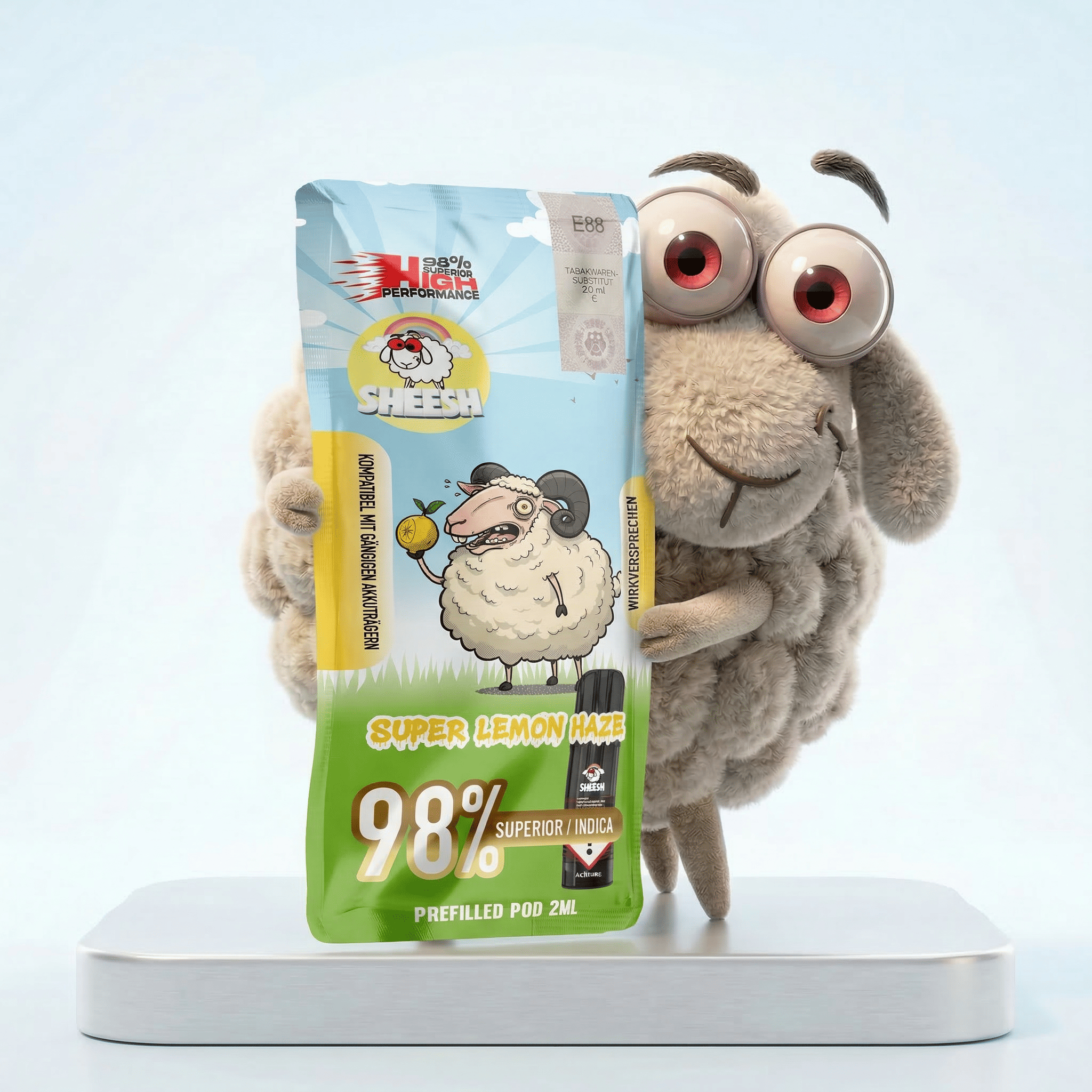
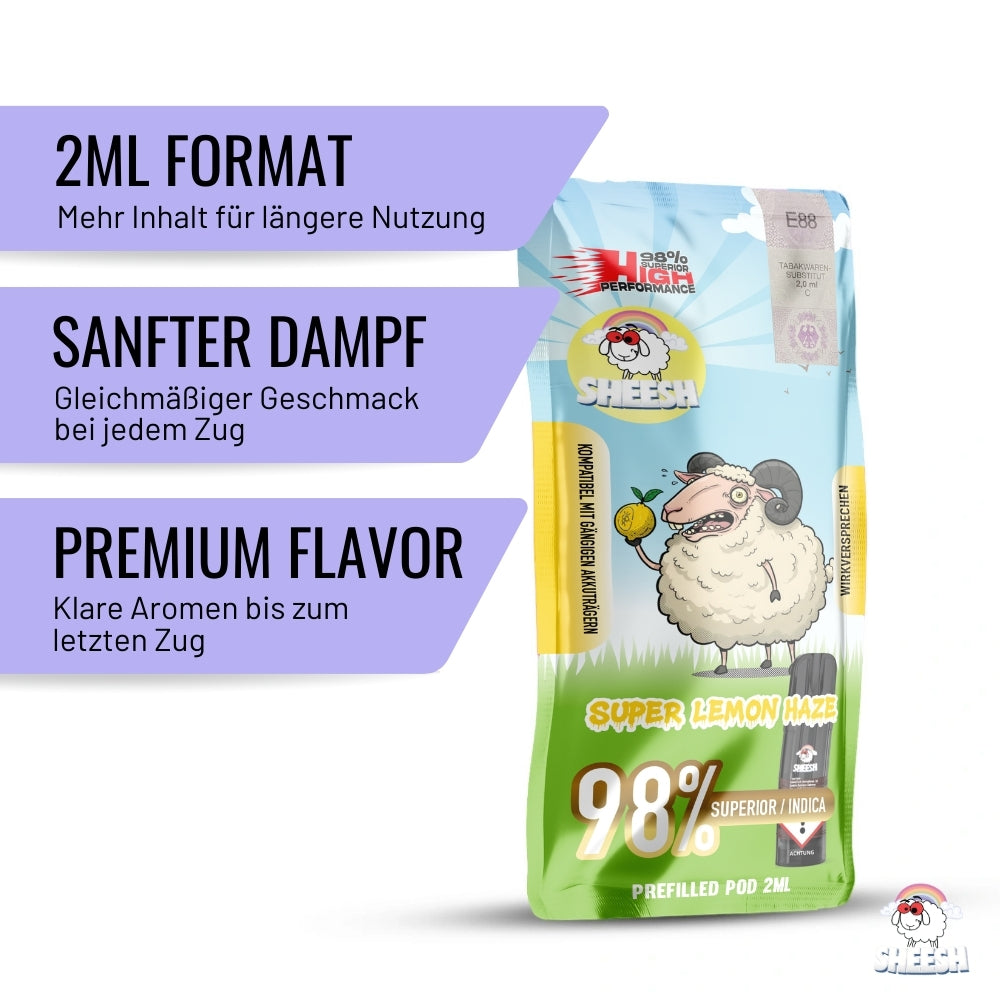
The strains at SHEESH carry the names of these well-known original strains and are built around their aroma. Citrusy and bright starts with Super Lemon Haze, available as a pod, a vape, a flower and a pre-roll. Earthy and balanced is White Widow. Zkittlez and Purple Punch stand for the sweet, dark side.
All strains as pods are under Pods, as disposable devices with the H3 Superior Vapes and the DNT-9 Vapes, as flowers with the SHEESH Budz and ready rolled with the SHEESH Rollz.


Leave a comment
This site is protected by hCaptcha and the hCaptcha Privacy Policy and Terms of Service apply.